

Across the global hotel industry, demand is not the primary problem. Travellers are searching, comparing, messaging, and asking questions every day. The real issue lies in how hotels capture and respond to that demand.
The Modern Hotel Reality: Demand Exists, Attention Is Fragile
Unlike airlines or large online travel platforms, most hotels were not built to manage high-volume, multi-channel communication in real time.
Inquiry handling evolved organically - emails went to the front desk, phone calls to reception, social messages to marketing, and form submissions to wherever they happened to land. Over time, this created a fragmented system that quietly leaks revenue.
In practice, hotels lose bookings not because guests lose interest, but because replies arrive too late, arrive inconsistently, or never arrive at all.
The Core Operational Constraint Hotels Face
Outside of maintaining the property itself, the most persistent operational pressure hotels face is occupancy stability. A room unsold tonight can never be recovered tomorrow. Every empty night is permanent lost revenue.
Hotels operate under seasonal pressure that few other industries experience:
- Peak months generate the majority of annual revenue
- Shoulder seasons require aggressive demand stimulation
- Off-season occupancy is often maintained at cost simply to retain staff
To survive this cycle, hotels must keep rooms filled year-round—not perfectly, but predictably.
This is where inquiry handling becomes strategically important.
When inbound demand exists but is not captured efficiently, marketing spend increases, staff workload rises, and profitability declines.
The problem compounds quietly because missed inquiries rarely appear in reports.
How Guest Inquiries Actually Arrive
Guest inquiries no longer follow a single, predictable path.
They arrive through:
- Website contact forms
- Booking engine questions
- Facebook and Instagram messages
- Google Business messages
- Comments on paid ads
- and more
Each channel represents intent. Some are casual questions. Others signal immediate booking readiness.
The challenge is not volume - it's dispersion.
When inquiries arrive across multiple platforms, hotels struggle to see them as one unified stream of demand. Instead, they become isolated tasks handled by whoever happens to notice them first.

Without a central system, guest enquiries are seen late, passed around, or missed entirely - GoHighLevel fixes this by capturing and routing every message instantly so bookings aren’t lost to delay.
What Typically Goes Wrong
In most hotels, inquiry breakdowns follow a familiar pattern:
- A guest messages the hotel
- The message is seen hours later - or not at all
- The staff member reading it does not have the answer
- The inquiry is forwarded internally
- The internal team is busy with operational work
- The guest books elsewhere
No one makes a mistake. No one ignores the guest intentionally. The system simply does not support speed.
Social channels are particularly vulnerable. Messages sent through Instagram or Facebook often fall outside daily operational workflows. Ad comments may be noticed days later, long after the guest has moved on.
Why Speed Matters More Than Price
In competitive markets, response speed often determines conversion more than price.
Guests sending inquiries are typically comparing multiple options simultaneously. The first clear, confident response creates momentum. Delayed replies introduce doubt.
From the guest’s perspective, silence signals:
- Disorganisation
- Lack of attentiveness
- Uncertainty
Even premium hotels lose bookings this way - not because their product is inferior, but because their response is slower.
The Hidden Cost of Manual Inquiry Handling
Manual inquiry handling introduces three systemic costs:
1. Lost Revenue
Every missed inquiry represents demand that marketing already paid for. Whether through ads, SEO, or OTA visibility, the cost of acquisition has already been incurred.
2. Staff Overload
Front desk and back-office teams absorb inquiry handling on top of operational responsibilities. This creates reactive work patterns, stress, and inconsistency.
3. Inconsistent Guest Experience
Some guests receive quick, detailed responses. Others receive generic replies or no response at all. Brand perception becomes dependent on timing rather than standards.
Why This Problem Persists
Hotels often assume inquiry automation is a marketing problem. In reality, it is an operational design problem.
Most hotels lack:
- A single system that captures all inquiries
- Automatic classification of inquiry intent
- Clear ownership once an inquiry arrives
- Visibility into response times and outcomes
Without structure, performance depends on individual effort. That model does not scale.
A System-Level Approach to Inquiry Automation
Before any technology is introduced, the process must be clear.
An effective inquiry system follows five principles:
- Centralisation – Every inquiry enters one system
- Categorisation – Intent is identified immediately
- Instant Acknowledgment – The guest is never left waiting
- Internal Routing – The right team is notified automatically
- Tracking – Every inquiry is visible until resolved
This approach does not replace staff - It removes friction.
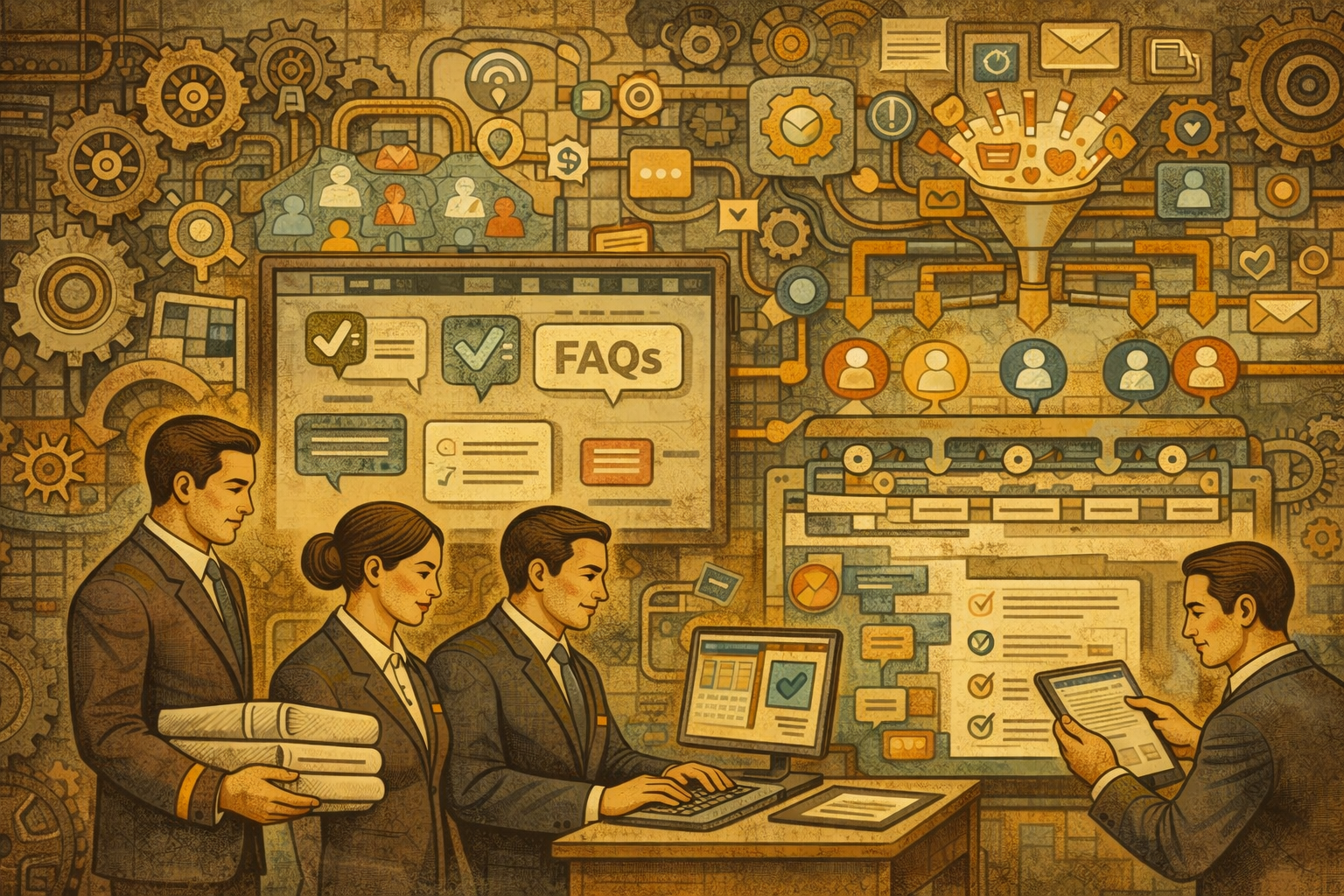
GoHighLevel can help hotels centralise every guest enquiry, send instant responses, automate FAQs, and route only high-intent conversations to staff - ensuring no message is missed and every booking opportunity is captured.
How Automation Changes the Outcome
When inquiry automation is implemented correctly:
- Guests receive immediate confirmation that their message was received
- Frequently asked questions are answered instantly
- Sales or reservations teams are alerted only when human input is required
- No inquiry disappears into personal inboxes
GoHighLevel enables this by unifying all inbound messages into a single conversations inbox and triggering workflows based on inquiry source and content.
The technology supports the process - not the other way around.
Operational & Financial Impact
Hotels that centralise and automate inquiry handling typically experience:
- Faster response times across all channels
- Higher inquiry-to-booking conversion rates
- Reduced dependence on OTAs for last-minute demand
- Lower stress on front desk and reservations teams
Even small improvements compound. Recovering a handful of bookings per week materially affects annual revenue.
Why This Becomes a Competitive Advantage
Most hotels compete on location, price, and amenities.
Few compete on responsiveness.
When inquiry handling is solved:
- Marketing spend becomes more efficient
- Staff operate with clarity rather than urgency
- Guests experience professionalism before arrival
Speed becomes a signal of quality.
The Strategic Shift
Hotels that solve inquiry automation stop leaking demand. They create a system where every message is acknowledged, tracked, and acted on.
In an industry where rooms expire nightly, responsiveness is not a convenience - it's a revenue strategy.